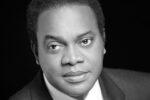
Former Cross River State governor, Donald Duke, reflects on the enduring legacy of General Abdulsalami Abubakar (Rtd), who midwifed Nigeria’s return to democracy in 1999. In this interview, he examines the former Head of State’s continuing role as an elder statesman and international mediator and explains why his forthcoming memoir matters for the country’s historical record. Duke also recalls his own experience urging former Head of State, General Yakubu Gowon (Rtd.), to document his account of the Nigerian Civil War.
After he stepped down as Head of State, how has General Abdulsalami Abubakar (Rtd.) continued to influence Nigerian democracy from outside government?
He has attained an international status that sees him called upon to mediate conflicts around the world, particularly in Africa, because he is a respected figure. There is hardly a democratic election on the continent for which he is not asked to serve as an observer because the contesting parties on all sides have confidence in him. That is something we as Nigerians should be proud of.
Internally, he has worked with other respected figures to ensure that our democracy does not become fratricidal. Robert Mugabe once said that going into an election in Nigeria feels like going to war, and that is unfortunately true. Politics here is increasingly seen as an occupation rather than a vocation. General Abubakar has become a voice of reason in our polity, getting opposing sides to sign peace accords and calm tensions. It is not a situation where the winner takes all, and as long as he keeps his stature, he remains very relevant.
How does his role compare with that of former President, Chief Olusegun Obasanjo, who has also played a statesman’s role since leaving office?
Both men are great statesmen, and Obasanjo is, perhaps, one of the most respected leaders Africa has produced. But because he was elected on the platform of a party, he is seen as partisan and could not play the same unifying role within Nigeria that Abubakar plays. Abubakar, on the other hand, is seen as totally non-partisan. Obasanjo has played significant peacekeeping roles elsewhere on the continent, including in the resolution of crises in the Congo, Ethiopia, and Darfur, but at home he is regarded as partisan.
That does not diminish Abubakar. After taking the baton of leadership, he stabilised the polity by depoliticising the military, and that remains one of the foundations of his standing today.
Why is it important that General Abubakar is now publishing his memoirs and what role will this play in preserving Nigeria’s democratic history?
Young people today do not know how this geographical space called Nigeria evolved — from the empires that once existed here to the jihad of 1804, the amalgamation of the Northern and Southern Protectorates in 1914, and the constitutions that followed (the Macpherson Constitution and the Richards Constitution among them). When historians want to write about a society, they draw on resources such as biographies. If you read the biography of the Sultan of Sokoto, for instance, or the biography of Usman dan Fodio, you can piece together the events of that period.
So, those who have played a fundamental role must write [not necessarily their own personal story but] an account of the events they witnessed so that when historians go looking for material, they know where to find it. Take Britain as an example. It evolved from a small island once ruled by Rome into what is called the United Kingdom today, and that story is documented. Ask a Nigerian grandchild what they know about their own country and they hardly know anything, partly because history was removed from our school curriculum for many years and few researchers were incentivised to study it. I am glad it has been reintroduced.
Abubakar writing his memoir is a brilliant thing to do because he will be able to tell us not just about the one year he was Head of State but his broader outlook, including his experience of the Civil War. All those pieces make up the jigsaw puzzle that is Nigeria.
You were also involved in General Ibrahim Babangida (Rtd)’s biography. How contentious can these accounts be?
Such biographies will always be contentious, but it takes boldness to say, “This is the truth as I see it,” or “as I saw it,” and to let readers make of it what they will. President Obasanjo has been prolific in this regard, having authored over 25 books. He recently gave me a copy of Lest We Forget, in which he wrote about slavery. All these accounts add up to the resources we can draw from, and I was glad to also learn recently that Gowon’s long-awaited biography is finally being launched.
You personally urged General Gowon (Rtd.) to write his memoir. Could you share that story?
When I was governor of Cross River State, we had the Bakassi issue, and Gowon came to visit me in Calabar. We spoke about it, and I urged him then (this would have been around 2004) that, having governed for nine years, he needed to say something. The Civil War was the most contentious period of our history, and he was in charge, so he needed to speak. He was very reticent about it.
Not long after we lost Bakassi, at a Council of State meeting, General Muhammadu Buhari (Rtd.), who was not yet president at the time, criticised the loss of Bakassi and laid the blame on Gowon, saying one of those in the hall had sold out Bakassi and should explain why. Gowon said nothing, but I could tell he was heartbroken, because according to him he had not sold anything out. His decision had been a military strategy aimed at securing cooperation from Cameroon to help blockade Biafra, yet he was seen to have sold the country short.
Afterwards, during a break, I went to him and said that if he did not tell his story, others would tell it for him, and he might not like what they say. It is his story, and that is why it is called history — his story. Gowon left office in 1975 (around 51 years ago now), and I am glad he has finally told it.
Was General Abubakar (Rtd.) himself similarly reluctant to write his story?
Babangida was also very reticent for a long time, until he read the biography of Yemi Ogunbiyi and it inspired him. We had told him that if he did not write, others would write all sorts of things about him and he would not be there to explain himself. Leadership is not about getting it right all the time; it is about being decisive when decisiveness is required.
The demand for these accounts is evident too. Babangida’s book is recently selling at an Abuja bookstore for NGN 120,000, even though the publisher’s price is NGN 20,000, which tells you there is real appetite for it, despite Nigeria not being known as a great reading nation.
As a final thought, why does documentation of this kind matter so much to you?
I studied History at A-Level, and my course covered 1919 to what was then the present day, taking in the tail end of the First World War through to 1979. That period showed in detail how the way the victors of the First World War treated the vanquished led to the rise of Adolf Hitler and eventually to the Second World War, the killing of millions of Jews, the destruction of Europe, and the emergence of the United States and the Soviet Union as global powers. None of that came down to us through folktales; they came from the biographies of the people who lived through it and wrote about it. That is why it is so important that we document our history if we have something to say.