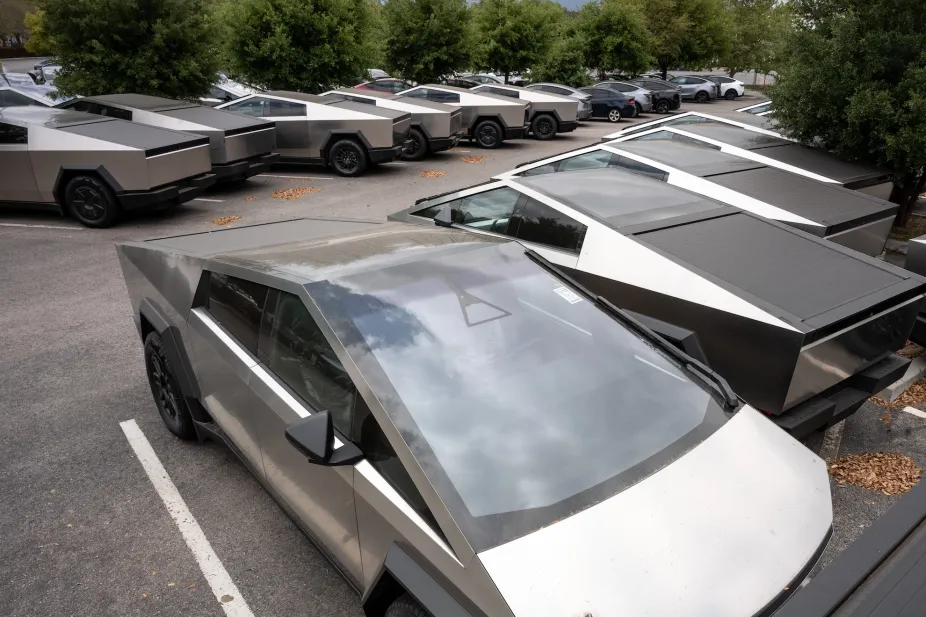
AUSTIN, Texas — Tesla will have to return deposits to “a lot of people” who ordered a Cybertruck, CEO Elon Musk said Monday, defending the company’s decision to end production of its polarizing stainless-steel pickup after less than four years on sale.
In a post on X, Musk said Tesla will try to build “as many as possible” before shutting down the Cybertruck line in about eight months, but acknowledged it cannot fulfil all outstanding orders before then.
“The Cybertruck order rate far exceeds our production rate. We will try to make as many as possible before shutting down the line in about 8 months, but will have to return deposits for a lot of people.”
The comments follow Musk’s announcement last week that Tesla plans to wind down Cybertruck production at Gigafactory Texas around mid-2027. The factory space and resources will be redirected to scale up production of the Cybercab, Tesla’s two-seater autonomous vehicle unveiled in October 2024, which has no steering wheel or pedals and is central to Musk’s robotaxi ambitions.
Musk rejects unprofitability claims
Musk pushed back sharply against reports that the Cybertruck was being killed because it was losing money.
“This is not a case of Cybertruck being unprofitable, as has been misreported by legacy media, but rather that the opportunity cost of the complexity of Cybertruck is vastly outweighed by the value of incremental Cybercab production,” he wrote.
In other words, Musk argued Tesla can make more money by using the same factory capacity, workers, and supply chain to build Cybercabs instead of the far more complex Cybertruck.
Tesla had also said last week it would add an extra production shift to clear outstanding Cybertruck orders before the line closes.
From 1 million reservations to a short run
The Cybertruck was unveiled in November 2019 to massive hype. Musk said at the time that reservations had ballooned to 1 million, and he predicted Tesla would eventually sell around 250,000 trucks a year.
Customer deliveries began in November 2023, but those reservations never translated into sustained sales.
Industry experts estimate only about 71,000 Cybertrucks have been sold since deliveries began. US sales fell 48% in 2025 to roughly 20,237 units, according to Kelley Blue Book, far below Musk’s annual target.
Some of those sales also came from inside Musk’s own business empire. SpaceX, which he leads, purchased $131 million worth of Cybertrucks from Tesla in 2025, according to its S-1 filing ahead of its IPO.
What happens next for buyers
Tesla has not yet said how many deposits will be refunded, how much each buyer will receive, or when the refunds will be processed.
For now, the company says it will prioritize building as many remaining ordered trucks as possible over the next eight months. Buyers whose trucks cannot be built before the line shuts down are expected to have their deposits returned.
The end of Cybertruck production marks a major strategic pivot for Tesla: away from a flagship consumer pickup that was meant to challenge Ford, GM and Rivian, and toward a bet that autonomous Cybercabs — not privately owned trucks — will drive its next phase of growth.
Analysts note that a final scarcity bump is possible as production winds down, but even that is unlikely to push demand close to the lofty projections made when the truck was first revealed.