
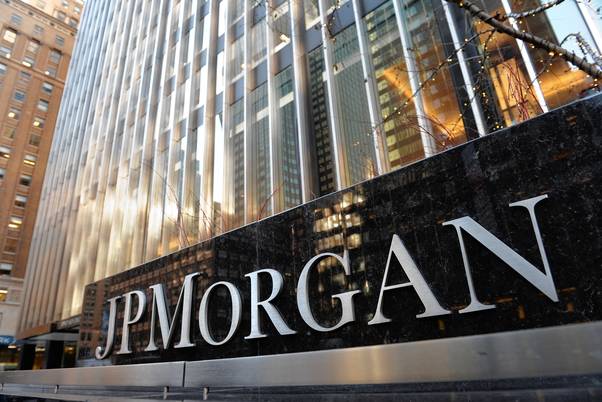
The Wall Street lender already has a presence in Lagos, but now wants a full merchant banking operation — a move that could reshape corporate finance in Nigeria
Lagos — October 20, 2026
JPMorgan Chase is seeking to deepen its footprint in Nigeria with plans to establish a locally licensed merchant bank, subject to approval by the Central Bank of Nigeria (CBN).
For the record, this is not the bank’s first entry into the country. JPMorgan has operated a representative presence in Lagos for years. What is new is its application for a merchant banking licence that would allow it to operate as a fully licensed entity.
Reports published on October 20 indicate the bank has deposited ₦50 billion with the CBN as part of the licensing process. Regulatory approval is yet to be confirmed, with the bank reportedly targeting clearance by late 2026 or early 2027.
Why Nigeria, Why Now?
The move is a bet on high-value corporate finance, not retail banking.
Nigeria’s large economy, extensive private sector, and substantial financing needs across energy, manufacturing, telecoms, infrastructure and agriculture create a deep pool of corporate transactions — from debt issuance and syndicated loans to M&A advisory and foreign-exchange management.
A second driver is Nigeria’s capital market. As companies look for alternatives to expensive bank loans, demand is growing for corporate bonds, equity offerings, and structured finance — areas where JPMorgan has global scale.
Nigeria also offers a strategic hub for pan-African deals. Companies operating across multiple African markets need support with cross-border payments, trade finance, and capital movement — services the bank can offer through its international network.
What JPMorgan Stands to Gain:
1. Fees from high-value deals: Merchant banking income comes from arranging loans, underwriting securities, advising on acquisitions, and structuring project finance. The bank can earn substantial fees without holding the full credit risk.
2. Interest income: If permitted under its licence, it could lend directly to large, creditworthy corporates.
3. FX, payments and trade finance: Nigerian importers, exporters, and multinationals require sophisticated cash management and currency risk solutions.
4. Institutional and government business: This includes debt capital markets, risk management, and custody services — subject to regulatory permissions.
For JPMorgan, the prize is not just Nigeria, but a stronger origination base for its Europe, Middle East and Africa (EMEA) corporate and investment banking franchise.
The Risks: Success is not 100% guaranteed. Three major headwinds remain:
Currency volatility: Managing naira earnings against dollar reporting and helping clients who earn in naira but borrow in dollars will require rigorous risk management.
High financing costs: Nigeria’s high interest rate environment shrinks the pool of willing and able borrowers.
Intense competition: Nigeria’s tier-one banks already have deep corporate relationships, local market knowledge, and competitive pricing. JPMorgan will need to win mandates on execution quality and global investor access, not just its name.
It must also meet CBN requirements on capital, governance, compliance and reporting.
What It Means for Nigeria:
If approved, JPMorgan’s entry would bring more competition to corporate and investment banking, potentially giving large Nigerian companies broader access to international investors and more sophisticated financing options. It could also provide skill transfer for local finance professionals.
It will not, however, automatically mean cheaper loans or mass job creation. As a merchant bank, its focus will be on a small number of large clients and transactions.
It is also unlikely to displace Nigerian banks. More likely is a redistribution — with global and local banks competing and collaborating on syndicated loans, bond issues, and advisory mandates.
What to Watch Next
1. Capital commitment: The ₦50 billion is a regulatory deposit, not the full extent of its planned investment. The real scale of its commitment will be key.
2. Lender or arranger? Will it deploy substantial balance sheet credit or primarily earn fees by arranging deals for others?
3. Breadth of impact: Will benefits flow beyond blue-chip corporates to mid-sized productive businesses?
JPMorgan is betting on Nigeria’s financial opportunities — not just its population. Whether that bet pays off will depend on its ability to convert potential into profitable, well-managed transactions in a complex but opportunity-rich market.